

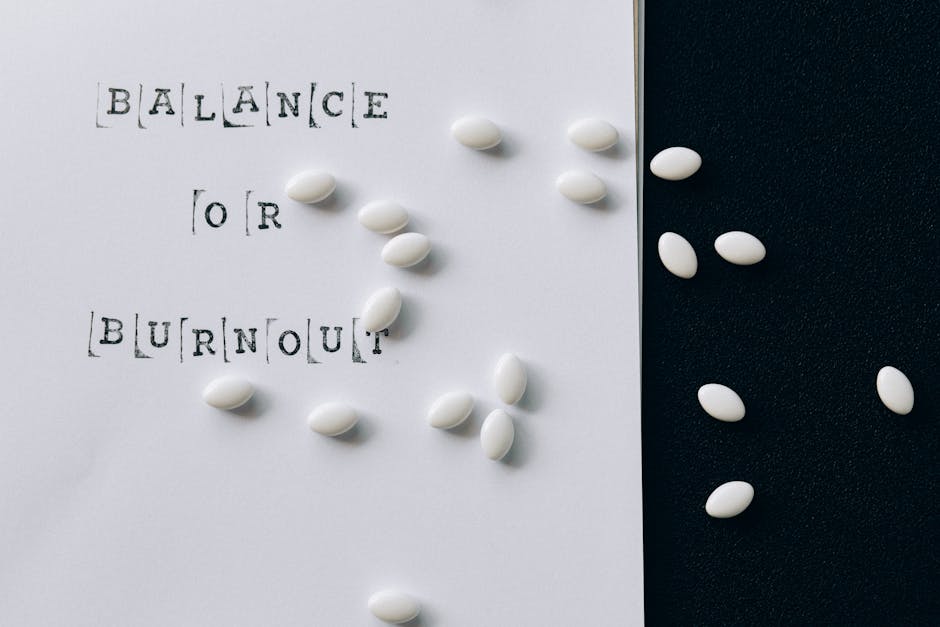
People often talk about mental health as if it’s a single dial you can turn up with willpower and turn down with rest. Real life rarely works that neatly. Most of the time, wellbeing shifts because several pressures are stacking at once – some inside the body, some in our thoughts and history, and some in the conditions we’re trying to live in.
When someone says, “I don’t know why I’m not coping,” what they often mean is: nothing is obviously catastrophic, yet they feel thinner-skinned, more reactive, less motivated, or strangely numb. That confusion can add a second layer of strain – self-criticism on top of exhaustion. It’s usually more accurate (and kinder) to assume there are multiple influences interacting, some of them subtle, some of them chronic.
One of the most helpful shifts is moving from “What’s wrong with me?” to “What’s been shaping me lately?” That question makes room for complexity without turning life into a problem to solve.
When the body is carrying more than we notice
Emotional resilience is not separate from the body. Sleep disruption, inconsistent meals, long periods of inactivity or overexertion, and the background effects of alcohol or other substances can all change how steady a person feels. Not because they’re “failing,” but because the nervous system is trying to operate without its usual fuel and recovery.
This is why people sometimes feel anxious without a clear worry, or irritable without a clear trigger. The mind looks for a story to explain the sensation, but the sensation may have started as simple depletion. Over time, that depletion can narrow a person’s tolerance for everyday friction – noise, messages, decisions, social demands – until even small tasks feel disproportionately heavy.
The psychological layer: meaning, beliefs, and inner weather
Two people can live through the same week and come out with very different emotional outcomes. Often the difference isn’t “strength,” but interpretation: what they believe the week says about them, what they expect will happen next, and how safe it feels to be imperfect in their current environment.
Beliefs like “I should be able to handle this,” or “If I slow down, I’ll fall behind,” can quietly keep someone in a high-alert state. Even when life calms, the body may not. That’s a common pattern in burnout: the schedule eases, but the nervous system stays braced, as if relief is temporary and danger will return.
Past experiences matter here too – not as a neat explanation, but as a lens. If someone has learned that support is unreliable, they may default to handling everything alone. If someone has learned that mistakes lead to rejection, they may become perfectionistic. Those strategies often begin as protection, then later become exhaustion.
Social conditions: relationships, work, money, and belonging
Mental health is also shaped by the world around us: the stability of housing, the pressure of bills, the tone of a workplace, the expectations of family, the safety of a community, the experience of discrimination or exclusion. These aren’t “lifestyle choices.” They are conditions that can steadily drain a person’s sense of agency and hope.
Relationships are especially powerful because they can either metabolize stress or multiply it. A supportive connection doesn’t remove problems, but it changes how alone a person feels while carrying them. On the other hand, conflict, unpredictability, or isolation can make even manageable challenges feel endless.
There’s also a quieter social factor people underestimate: the absence of belonging. You can be surrounded by people and still feel unseen. You can be high-functioning and still feel emotionally homeless. When belonging is thin, the mind tends to ruminate more, because there’s no shared place to put the weight.
Why things can feel fine – until they don’t
A common pattern is delayed impact. People push through a demanding period, functioning on adrenaline and duty, and only feel the emotional cost once the immediate pressure lifts. That’s not weakness; it’s the body finally allowing you to feel what it couldn’t afford to feel earlier.
Another pattern is accumulation. No single factor is “the reason,” but together they create a constant drip: poor sleep, a tense home atmosphere, financial uncertainty, too much screen time, too little movement, a sense of purposelessness at work, fewer real conversations. Each piece is survivable; the combination can quietly reshape mood, patience, and self-trust.
Leadership pressure and the hidden loneliness of “being the strong one”
In teams, families, and communities, certain people become the stabilizers. They anticipate needs, absorb conflict, keep plans moving, and reassure others. Over time, they may stop noticing their own strain because everyone else is used to them being capable.
The risk isn’t simply “too much work.” It’s the emotional role: always containing, rarely being contained. When leaders (formal or informal) don’t have places where they can be unpolished – where they can admit fear, doubt, or fatigue without consequence – resilience can start to look like performance. And performance is hard to sustain when life gets messy.
Temporary distress vs. a deeper stuckness
Most people move in and out of difficult emotional weather. A rough week, a conflict, a deadline, a run of poor sleep – these can shake mood and concentration, then pass when life steadies.
Deeper stuckness often feels different: the same heaviness keeps returning, the joy doesn’t come back in the usual ways, or the person starts shrinking their life to avoid discomfort – cancelling plans, withdrawing, numbing out, or running on autopilot. It’s not that they’re choosing it; it’s that their system is trying to reduce load in the only ways it currently knows.
If someone is feeling overwhelmed, hopeless, or like they’re struggling to stay safe, it can help to talk to someone supportive and real – someone who can sit with what’s happening rather than argue it away. Many people also find it grounding to reach out to a trusted professional or a local support service, not because they’re “broken,” but because human beings aren’t designed to carry everything alone.
What tends to support mental health over the long arc isn’t a single perfect habit. It’s the ongoing interplay of recovery, connection, and environment – plus the permission to be a person instead of a machine. When we look at mental health through that wider lens, the fluctuations make more sense, and self-blame starts to loosen its grip.