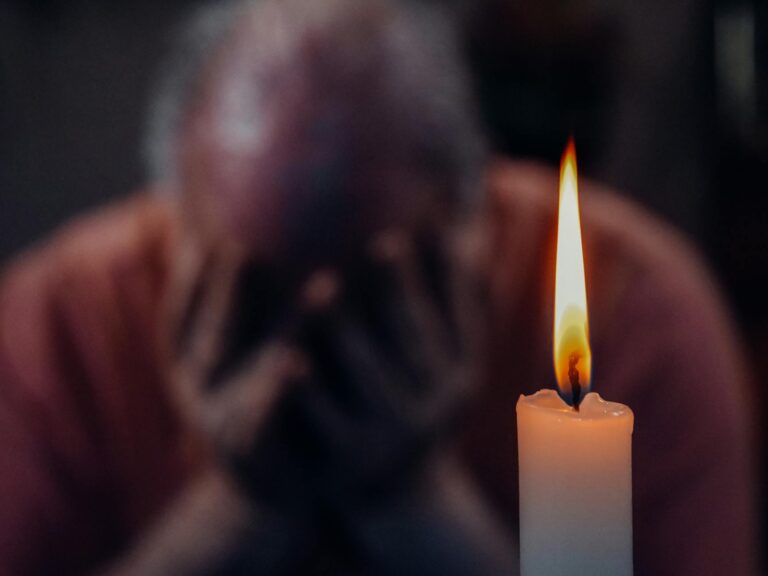


Fear has a way of narrowing the world. It pulls attention toward what could go wrong and away from what is still working, still safe, still possible. For many people, that shift happens during ordinary life strain – work pressure, exams, money worries, conflict at home, uncertainty about the future. Nothing “mystical” is required; a nervous system under load will try to protect you, even when the threat is more imagined than immediate.
Anxiety can feel similar, but it often has a different texture. Fear tends to have an object – something specific that seems dangerous. Anxiety can be more like a background hum: a sense that something is off, that you should be bracing, that you can’t fully relax because you might miss the moment things fall apart. When that hum becomes constant, it doesn’t just feel unpleasant; it can quietly reshape your habits, your relationships, and your sense of who you are.
I’ve seen many people blame themselves for this – assuming it means they’re weak, failing, or “not coping like everyone else.” More often, it’s a sign that their system has been carrying too much for too long, with too little recovery, clarity, or support.
How fear and anxiety start running the day
When you’re anxious, your mind becomes a problem-finding machine. It scans for risk, replays conversations, and tries to predict outcomes. In small doses, this can be useful – planning, preparing, noticing real concerns. But under chronic stress, it can become relentless. People start over-checking, over-apologising, avoiding decisions, or delaying tasks until the “right” moment arrives (which rarely does).
One of the most common patterns is avoidance that looks like self-protection. You skip the meeting, cancel the social plan, don’t open the email, don’t have the conversation. In the short term, your body gets relief: the tension dips. The brain learns, “Avoiding works.” Over time, though, life shrinks. The list of “unsafe” situations grows, and confidence erodes – not because you’re incapable, but because you’re not getting the experiences that rebuild trust in yourself.
Another pattern is over-control. Some people respond to anxiety by trying to manage everything: routines become rigid, standards become punishing, and small uncertainties feel intolerable. This can look like high performance from the outside, but inside it often feels like living with your shoulders up around your ears – always on guard, rarely at ease.
Why it can become persistent
Long-term fear and anxiety often aren’t just about a single stressor. They’re about accumulation: months of poor sleep, constant demands, unresolved conflict, financial strain, loneliness, grief, or a role that requires you to be “the strong one” for everyone else. When there’s no real downshift – no space to process, no sense of safety, no permission to be human – your system stays in a heightened state.
Uncertainty is a major amplifier. The mind would often rather have a painful certainty than a vague unknown. If you don’t know what’s coming next, your imagination fills in the blanks, usually with worst-case scenarios. This isn’t a character flaw; it’s a very normal attempt to reduce uncertainty by rehearsing for danger. The trouble is that rehearsing danger all day starts to feel like danger is actually happening.
It also helps to name the social layer: anxiety thrives in isolation. When people feel alone with their fear, it grows teeth. When fear is shared with someone steady – someone who doesn’t rush to fix it, minimise it, or judge it – it often becomes more workable.
What “coping” looks like in real life
For many people, the turning point isn’t a single technique. It’s the moment they stop arguing with their own experience. Not surrendering to fear, but acknowledging: “My system is activated. Of course it is, given what I’ve been carrying.” That shift – from self-criticism to self-recognition – creates room to respond rather than react.
Practical coping often starts with reducing the sense of emergency. When anxiety spikes, people tend to speed up: faster thinking, faster scrolling, faster talking, faster decision-making. A steadier response is slower and more concrete: doing one small task, returning to the present environment, and choosing the next right step rather than solving the whole future.
It can also help to notice the difference between signals and stories. Signals are what your body and mind are actually experiencing – tension, restlessness, racing thoughts, irritability, dread. Stories are the interpretations layered on top – “This means I’ll fail,” “Everyone will see I’m not okay,” “I won’t be able to handle it.” Signals deserve care and attention. Stories deserve curiosity. Many people find relief when they stop treating every anxious thought as a prophecy.
Support that doesn’t make it worse
Not all support feels supportive. Some people respond to anxiety with forced positivity, quick solutions, or pressure to “just be confident.” That can accidentally increase shame – especially if the person already feels embarrassed about struggling.
The most helpful support is often simple and relational: someone who stays present, listens without interrogating, and helps you feel less alone in your own mind. In communities and workplaces, this can look like leaders who normalise stress responses without rewarding burnout; teams that make it safe to ask for clarity; friends who check in consistently rather than only when things look dramatic.
If you’re the person offering support, it’s worth remembering that you don’t have to be perfect. You just have to be real: “I’m here. I’m not scared of your feelings. We can take this one step at a time.”
When it starts to feel like too much
There’s a difference between temporary anxiety that rises with pressure and settles with rest, and a more persistent struggle that starts to take over daily life – sleep, work, relationships, appetite for joy, ability to concentrate. When fear begins to dictate the boundaries of your life, it’s a sign that more support and care may be needed than you can generate alone.
If you’re feeling overwhelmed or frightened by where your thoughts are going, it can help to talk to someone you trust or a qualified professional who can hold this with you. And if you ever feel like you might not be safe with yourself, you deserve immediate, compassionate support – reaching out to local emergency services or a crisis hotline in your country can connect you with someone trained to help in that moment.
Fear and anxiety don’t mean you’re broken. They usually mean something in you is trying – imperfectly, loudly – to keep you safe. With time, support, and gentler patterns, many people find that the world widens again. Not because life becomes perfectly certain, but because they become less alone inside it.