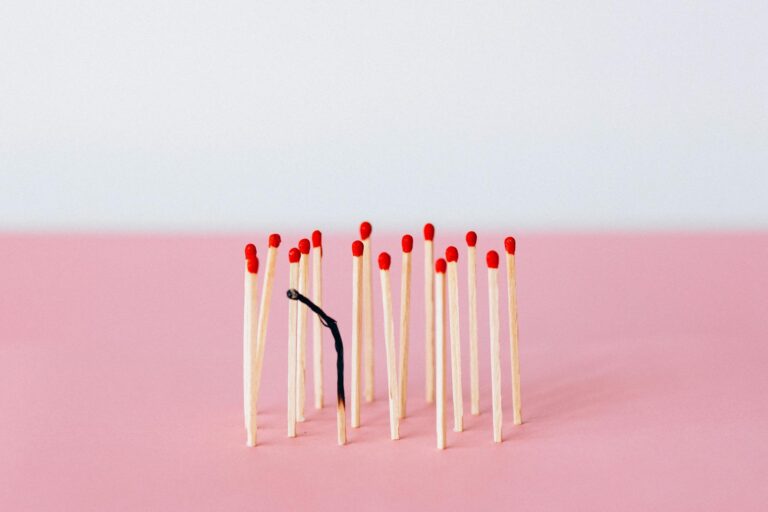

There’s a particular kind of toughness that shows up when things start to slide: you keep going, you keep it contained, and you tell yourself it’ll pass if you just stay busy. From the outside, it can look like strength. From the inside, it often feels like carrying a weight you can’t quite name.
Many men describe the same early shift when life gets hard: you withdraw a little. You reply slower. You stop making plans. You “don’t want to be a burden.” And because nothing dramatic happened – no obvious crisis – you can end up convincing yourself you don’t deserve support. That quiet drift matters, not because it means something is “wrong” with you, but because isolation has a way of making everything feel more permanent and more personal than it really is.
What helps, more often than not, isn’t a grand turnaround. It’s a few small moves that interrupt the spiral – tiny signals to your nervous system and your sense of identity that you’re still here, still connected, still capable of getting through a rough patch.
The moment you start hiding is often the moment to reach out
A common pattern in stress is the “self-protection loop”: you feel overwhelmed, so you pull back to avoid more pressure; pulling back reduces support; reduced support makes you feel more overwhelmed. It’s not weakness. It’s a very human attempt to cope with overload.
Reaching out early works because it breaks that loop before it hardens into a new normal. For a lot of men, the most realistic version of “reaching out” isn’t a deep heart-to-heart. It’s a simple message: “Been a rough week – fancy a walk?” or “Got a minute for a quick chat?” The point is contact, not a perfect explanation.
And it helps to choose someone who can listen without trying to fix you. Being “fixed” can feel like being managed. Being listened to can feel like being respected.
Routine isn’t boring – it’s stabilizing
When life feels uncertain, the mind searches for control. If it can’t find it, it often defaults to rumination: replaying conversations, imagining worst-case scenarios, judging your own reactions. A basic routine doesn’t solve the problem, but it reduces the number of decisions your brain has to make while you’re already stretched.
Men often underestimate how much steadiness comes from ordinary structure: waking at roughly the same time, eating something decent, leaving the house, doing one task you can finish. These aren’t productivity hacks. They’re anchors. They remind you that you still have influence over your day, even if you can’t control everything that’s happening around you.
Movement and outdoors: less about fitness, more about state change
A short walk can sound almost insulting when you’re carrying real stress. But the value isn’t “exercise.” It’s a shift in state – light, air, a different set of sounds, a few minutes where your body is doing something simple and rhythmic. That kind of sensory reset can soften the intensity of thoughts that feel relentless indoors.
For many people, especially when emotions are tangled or hard to name, moving first makes talking easier later. It’s as if the body needs to feel a little safer before the mind can loosen its grip.
Music, quotes, and small inputs that change the inner weather
When you’re low, your attention narrows. You notice what’s going wrong, what you didn’t do, what you might lose. A motivational playlist, a line that gives perspective, a social media account that feels relatable – these can act like “counterweight inputs.” Not toxic positivity, not pretending everything’s fine, just reminders that your current mood isn’t the whole truth of your life.
It’s worth being selective here. Some content leaves you feeling connected and understood. Other content leaves you feeling behind, defective, or alone. Your feed can either reduce pressure or quietly add to it.
Doing something new can restore a sense of usefulness
Stress can shrink your world down to problems and performance: what you should be doing, what you’re failing at, what you can’t figure out. Trying something new – especially something that involves other people – often restores a missing ingredient: a sense of contribution.
Volunteering is a good example because it creates a low-pressure form of belonging. You show up, you do a task, you’re part of something for an hour. You don’t have to explain your entire life story to be welcomed. For men who feel stuck in their own head, that kind of outward focus can be quietly powerful.
Leadership pressure: when “being the strong one” becomes a trap
Men in leadership roles – at work, at home, in community spaces – often carry an extra layer: the belief that their emotions will destabilize everyone else. So they compartmentalize. They stay functional. They keep the show running.
The cost is that their support system can erode without anyone noticing. People assume you’re fine because you’re competent. You assume you should be fine because you’re the one others rely on. If that dynamic sounds familiar, it can help to name it plainly with someone you trust: “I’m coping, but I’m carrying a lot.” That sentence alone can reopen doors that have quietly closed.
When it’s not just a rough patch
Some difficult periods pass with rest, connection, and time. Others linger – your sleep stays off, your patience thins, you stop enjoying what you usually enjoy, or you feel numb and detached for weeks. None of that is a personal failure. It’s often a sign that your system has been under strain for too long without enough recovery or support.
If you ever find yourself feeling unsafe, or having thoughts about not wanting to be here, it matters to tell someone rather than holding it alone – a friend, a family member, someone you trust, or a support line in your country. Not because you need to “make it a big deal,” but because you deserve company and care when things get that heavy.
What I’ve seen, again and again, is that people don’t usually climb out of hard seasons through one dramatic breakthrough. They climb out through reconnection: a message sent, a walk taken, a routine rebuilt, a small moment of being understood without being judged. The steps are often unimpressive. The effect, over time, can be life-giving.