

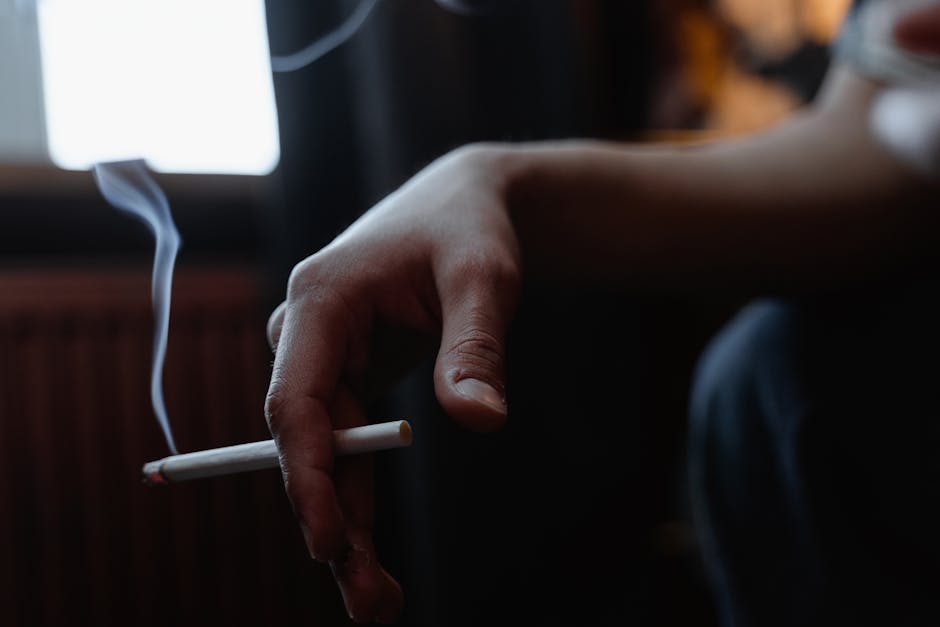
For many people, smoking isn’t just a habit. It’s a small, reliable moment in the day when everything briefly feels quieter – when the body unclenches, the mind narrows to one simple action, and you get a pause from whatever you’ve been carrying.
That’s why conversations about smoking and emotional wellbeing can feel loaded. People already know the “reasons to quit.” What’s harder to name is the reason it’s there in the first place: it often functions like a coping tool, especially in periods of stress, loneliness, pressure, or low mood.
When someone says, “It helps my anxiety,” or “It’s the only break I get,” they’re not being irrational. They’re describing a real pattern: the brain learns quickly what brings fast relief – even if the relief is short-lived and comes with a cost later.
The fast comfort loop
Nicotine tends to act quickly. That speed matters psychologically. When relief arrives within seconds, the mind links the action (stepping outside, lighting up, inhaling) with a shift in internal state (less agitation, more focus, a moment of calm). Over time, that link can become automatic.
But the loop isn’t only chemical. It’s also emotional and social:
- A boundary: smoking can be a socially acceptable way to leave a room, end a conversation, or step away from demands.
- A ritual: the sequence itself can be grounding – hands busy, breathing slowed, a predictable routine when life feels messy.
- A companion: in isolation, it can feel like “something that’s there,” especially during long evenings or difficult mornings.
- A belonging cue: smoke breaks can be where informal connection happens – quick chats, shared silence, a sense of being part of something.
Seen this way, smoking isn’t only about craving. It’s also about regulation – trying to manage stress, restlessness, numbness, or overwhelm with the tools that are available in the moment.
Why it can start to feel like it’s helping – then not helping
A common experience is that smoking feels like it reduces stress, while also quietly keeping the stress cycle going. Not because anyone is “weak,” but because quick relief can train the nervous system to expect quick relief.
Over time, people often notice subtle shifts:
- The calm doesn’t last as long as it used to.
- The urge shows up sooner, especially under pressure.
- What began as a choice starts to feel like a requirement – something you need to feel normal.
- There’s a background self-criticism: “Why can’t I stop?” which adds another layer of strain.
This is where shame can do real damage. Shame tends to isolate, and isolation tends to intensify habits that offer quick comfort. Many people don’t need more warnings – they need less self-attack and more support that treats the habit as information: a sign that something in life has been hard to carry.
Stress, identity, and the “I can’t cope without it” fear
One of the biggest barriers to change is not the cigarette itself – it’s the fear of what you’ll be left with when it’s gone. If smoking has been your transition between tasks, your way to downshift after conflict, your pause during grief, your companion during loneliness, then quitting can feel like losing a stabilizer.
People also build identity around it: the person who takes a smoke break, the person who can handle pressure because they can step outside, the person who connects with coworkers in that space. When you remove the behavior, you may briefly feel like you’ve removed a part of how you manage life and relationships.
That’s why sustainable change often involves replacing not just nicotine, but the function smoking served: a break, a boundary, a moment of regulation, a small sense of control.
What support tends to look like in real life
In everyday settings, people who manage to shift their relationship with smoking rarely do it through willpower alone. More often, they have some combination of:
- Reduced load: even small changes – more sleep, fewer conflicts, less chaos – can lower the “need” for quick relief.
- More honest connection: someone they can tell the truth to without being lectured.
- A plan for the hard moments: not a perfect plan – just a realistic one for mornings, after meals, after stressful calls, or during social triggers.
- Permission to be imperfect: slips treated as data, not failure.
Support matters because smoking often thrives in the private space where no one sees how tense you are, how tired you’ve become, or how much you’re holding together. When that hidden strain becomes more shareable, the habit sometimes loosens its grip.
If your mood feels low or your stress feels relentless
Some people notice that smoking is tightly woven into periods of persistent low mood, high anxiety, or emotional numbness. In those seasons, it can be less about enjoyment and more about getting through the hour. If that’s familiar, it may help to treat the smoking as one signal among many – pointing to how overloaded your system has been, and how much support you might deserve.
If you ever find yourself feeling unsafe with your thoughts, or worried about what you might do, it’s a sign to reach out to someone – someone you trust, or a local support line in your country. You don’t have to carry that intensity alone.
People don’t usually cling to cigarettes because they “don’t care.” They cling because something in them is trying to cope. When you start from that truth – without judgment – you can begin to ask a gentler question than “Why can’t I stop?” You can ask: “What has this been doing for me, and what else could help me feel steady?”