

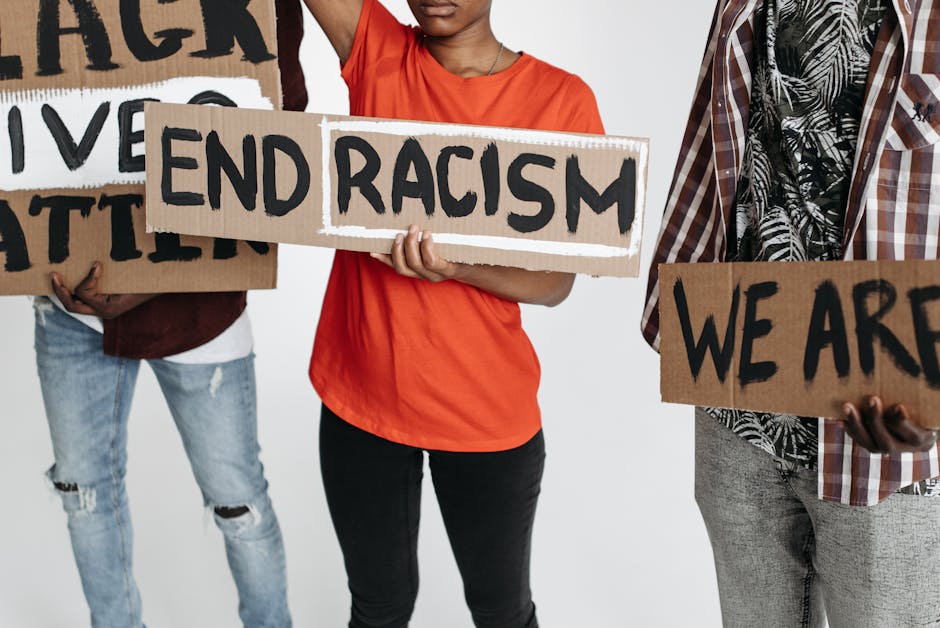
Racism isn’t only an event. For many people it’s an atmosphere – something you have to account for before you’ve even started the day. It can be in the room at work, in a classroom, in a shop, on public transport, online, and sometimes even in places that are meant to help. When that becomes normal, the nervous system learns to treat “ordinary life” as something that requires preparation.
What often gets missed is the emotional cost of having to stay ready. Not ready in a dramatic way – just the quiet readiness of scanning, translating, softening your tone, deciding what not to say, weighing whether it’s safe to challenge something, and rehearsing how you’ll be perceived. That kind of constant adjustment can drain a person’s capacity for joy, spontaneity, and rest.
People sometimes ask why racism affects mental health so deeply. Part of the answer is that it interferes with the basic human need to belong without bargaining for it.
How racism turns into chronic strain
Acute stress has a beginning and an end. Chronic strain is different: it’s the body and mind staying slightly “on” for too long. Racism can create that pattern through repeated experiences that signal, directly or indirectly, “You are not fully safe here,” or “You will be judged before you are known.”
Over time, people may notice:
-
Hypervigilance – watching for cues of threat or disrespect, even in neutral situations, because the cost of missing it feels too high.
-
Emotional compression – holding back anger, sadness, or fear to avoid being stereotyped as “too sensitive,” “aggressive,” or “difficult.”
-
Exhaustion that doesn’t match the day – not because someone is “fragile,” but because the day included extra invisible labor: self-monitoring, code-switching, and risk assessment.
-
Withdrawal – choosing silence or distance, not from lack of interest in others, but from repeated experiences of not being understood, believed, or protected.
None of these are character flaws. They’re adaptations – often intelligent ones – to environments that have taught someone that being relaxed comes with a price.
The “second injury”: not being believed
One of the most destabilizing experiences isn’t only the racist incident itself, but what happens after. When someone shares what happened and is met with minimising (“I’m sure they didn’t mean it”), debate (“Are you sure it was racism?”), or quick fixes (“Just ignore it”), the person learns that their reality will be negotiated.
This can create a particular kind of loneliness: being surrounded by people, but not feeling accompanied. It’s also why many people stop speaking up – not because it didn’t matter, but because the emotional cost of explaining it again and again becomes too high.
Racism, identity, and the pressure to perform
Racism doesn’t just harm through hostility. It also harms through expectation – being treated as a representative, an exception, a risk, or a “diversity story.” In workplaces and institutions, that can translate into a constant pressure to be twice as competent and half as emotional. People may find themselves overworking, overachieving, or staying relentlessly composed, because the margin for error feels smaller.
From the outside, it can look like resilience. Inside, it can feel like living without permission to be human.
Community support that actually helps
Support isn’t only a warm sentiment. It’s a set of experiences that tells someone: you don’t have to carry this alone, and you don’t have to prove it happened to deserve care.
In real life, helpful support often looks like:
-
Believing without interrogating – listening for impact, not cross-examining for “perfect” details.
-
Reducing isolation – checking in afterwards, staying present, and not letting the person become socially stranded with the fallout.
-
Taking responsibility in shared spaces – not leaving the targeted person to educate, mediate, or absorb the consequences alone.
-
Making room for mixed emotions – anger, grief, numbness, humour, fatigue. People often cycle through several at once.
For those experiencing racism, community can also be a place where the body finally downshifts: where you don’t have to translate yourself, anticipate stereotypes, or defend your perception. That kind of ease isn’t a luxury. It’s restorative.
Leadership psychology: what people watch for
In organisations, people learn quickly whether leadership is safe. Not “perfect,” but safe. They watch what happens when someone reports discrimination. They watch whether the response is protective or performative, whether the burden is shared or quietly pushed back onto the person harmed.
Leaders don’t have to have the perfect words. But they do need to communicate, through actions, that dignity is not conditional. When leaders treat racism as a relational rupture that affects trust, morale, and psychological safety – not as a PR risk – people feel less alone and less exposed.
When distress gets heavy
Racism can interact with existing stress, grief, financial pressure, or past trauma and make everything feel tighter. Some people notice sleep changes, irritability, numbness, or a sense of hopelessness that lingers. Others find themselves using avoidance – staying busy, staying online, staying distracted – because stillness brings the feelings back.
If someone is feeling overwhelmed, or having thoughts about not wanting to be here, it matters to treat that as a sign to bring in more support, not as something to hide. Reaching out to a trusted person or a professional support service can be a way of reintroducing safety and connection when the mind has started to narrow.
Racism asks people to live with an extra weight. Healing often begins in the moments where that weight is named plainly, held with others, and no longer treated as an individual’s private burden to outgrow.