

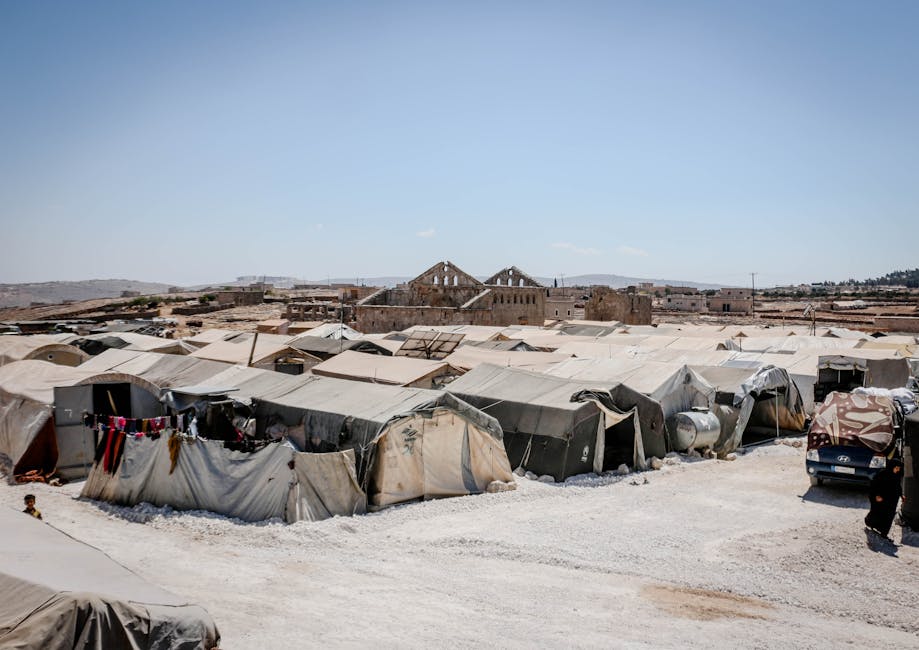
There’s a particular kind of loneliness that comes from being surrounded by people and still feeling unseen. Many refugees and asylum seekers describe arriving in a place of physical safety while carrying a quieter, ongoing sense of dislocation – language, customs, relationships, and identity all suddenly unmoored. It’s not just that familiar faces are gone; it’s that the small social cues that once made life feel navigable no longer apply.
In everyday wellbeing terms, community is often the difference between “I’m coping” and “I’m enduring.” Not because community erases grief or uncertainty, but because it gives the nervous system something it can recognise: warmth, predictability, and the sense that you don’t have to hold everything alone.
When people talk about “community” in a hopeful way, they’re usually not talking about an abstract ideal. They mean the neighbour who learns your name. The volunteer who explains a bus route without making you feel foolish. The local group where you can speak your own language for an hour and let your shoulders drop. These moments can look small from the outside, yet they often do something profound inside: they restore dignity.
Belonging is not a luxury; it’s a stabiliser
Under prolonged stress, the mind becomes efficient in ways that don’t always feel good. It scans for threat. It anticipates rejection. It conserves energy by withdrawing. If you’ve had to leave home under pressure, or live with uncertainty about your status, those protective habits can become even stronger. People may appear “fine” while living in a state of constant vigilance – careful with words, careful with trust, careful with hope.
Belonging interrupts that cycle. Not instantly, and not magically, but steadily. When someone experiences consistent welcome – being greeted, being included, being remembered – the body learns that the environment is not always hostile. Over time, that can soften hyper-alertness and make room for ordinary human things again: curiosity, humour, appetite, sleep, future-planning.
Why isolation hits harder in unfamiliar systems
Many communities underestimate the emotional load of navigating a new country. It’s not just paperwork; it’s the daily accumulation of moments where you don’t know the rules. How do you register at a school? What do you say at reception? What happens if you misunderstand a letter? Even simple errands can become exhausting when every step requires translation – linguistic and cultural.
When a person has no reliable social anchor, that exhaustion compounds. The mind starts to treat every task as high-stakes, because mistakes feel costly and embarrassment feels dangerous. Over time, people can shrink their lives to reduce risk: fewer outings, fewer conversations, fewer chances to be misunderstood. From the outside it can look like “not integrating.” From the inside it often feels like self-protection.
Community support that helps without taking over
The most helpful communities tend to do something subtle: they offer support without turning the person into a project. There’s a difference between being helped and being handled. Many refugees and asylum seekers have already experienced a loss of control; being over-managed – however well-intentioned – can quietly reinforce that loss.
Support that preserves agency often looks like options rather than instructions. An invitation rather than a demand. A check-in that doesn’t pry. Practical help that’s offered with respect – “Would it be useful if…?” – instead of assumptions about what someone needs.
It also helps when communities make room for reciprocity. People heal in part by remembering they can contribute. When someone is always positioned as a recipient, it can deepen shame and passivity. When they’re invited to share skills, cook a familiar dish, help someone else practise language, or simply be part of a group where their presence matters, identity begins to rebuild.
The quiet role of shared routines
Trauma and chronic stress often disrupt time. Days blur. The future feels suspended. Community routines – weekly meetups, walking groups, faith gatherings, school gates, local events – create gentle structure. They offer repeated contact without the pressure of intense disclosure. You can show up, be around others, and let connection grow at a human pace.
For many people, that pace is essential. Trust isn’t a switch; it’s a series of experiences where nothing bad happens. Community can provide those experiences – small, steady, non-dramatic – until the body starts to believe safety is possible again.
Leadership psychology: the tone is set by the “strongest signals”
Community leaders – formal and informal – shape what people feel allowed to be. A coordinator who notices who is sitting alone. A teacher who pronounces a name carefully. A faith leader who speaks about refugees with dignity rather than pity. These are “strong signals” that tell everyone else what the culture is.
In groups under strain, people take cues from the most confident voice in the room. If that voice is impatient, suspicious, or performative, newcomers learn quickly to stay quiet. If that voice is steady, respectful, and boundaried, a different dynamic emerges: people feel safer to ask questions, admit confusion, and take small social risks.
Good leadership here isn’t about grand speeches. It’s about protecting the social space – keeping it welcoming, preventing scapegoating, and making sure the burden of “fitting in” isn’t placed entirely on the person who has already lost so much.
When distress becomes heavier than “settling in”
It’s normal for resettlement to come with grief, irritability, numbness, or a sense of being on edge. But sometimes the weight doesn’t lift; it deepens. People may stop reaching out, sleep poorly for long stretches, lose interest in things that used to matter, or speak as if nothing will ever change. They might not describe it as “mental health.” They may simply say they’re tired, or that they don’t want to be a burden.
If someone seems increasingly withdrawn or hopeless, the most protective response from a community is often the simplest: consistent presence, gentle conversation, and help connecting to appropriate support in their area – without pressure, without judgement, and without making them feel like a problem to be solved. If someone talks about not wanting to live, it matters to take that seriously and stay connected; many places also have local crisis lines and urgent services that can offer immediate support.
Community can’t replace everything people have lost. But it can stop loss from having the final word. When a person is met with steady welcome – when their story isn’t demanded, when their dignity is protected, when their contribution is invited – something begins to return. Not a perfect sense of “before,” but a workable sense of “here.”