

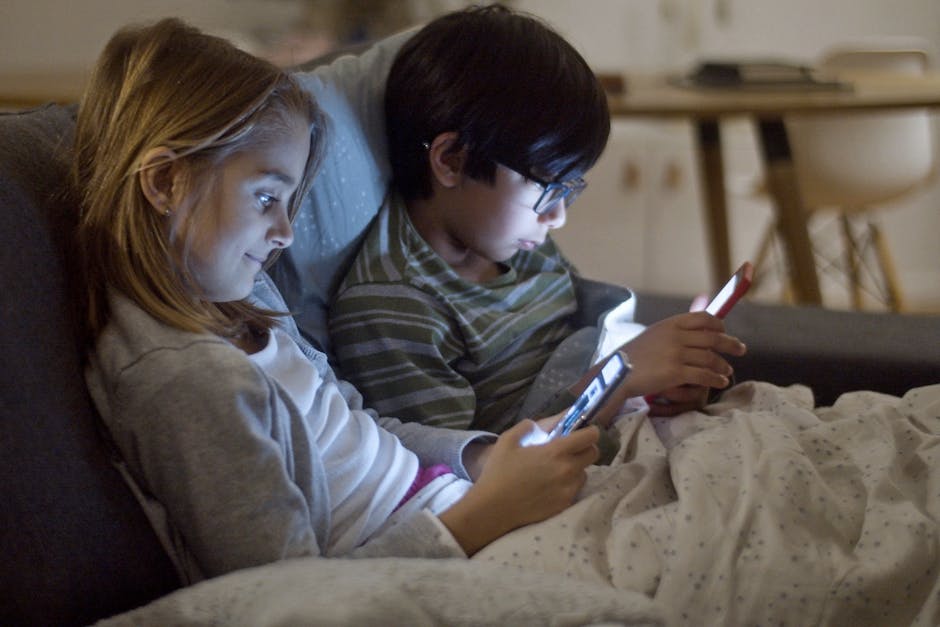
Conversations about children and screen time often swing between two extremes: panic that screens are “ruining” childhood, or dismissal that it’s all harmless because “everyone does it.” What tends to get lost is the everyday reality most families are living – screens are woven into school, friendships, downtime, and sometimes survival on a hard day.
When people ask whether screen time affects children’s mental health, they’re usually asking something more personal: “Is my child okay?” “Am I missing something?” “Why are evenings harder than they used to be?” Those questions deserve a calmer, more human answer than a simple yes or no.
The evidence base is still evolving, and it rarely supports a single, dramatic story. What it does support – again and again – is that the impact of screens depends heavily on the child, the content, the timing, and what screen use is replacing.
It’s not just “hours” – it’s what the hours are doing
Two children can have the same amount of screen time and walk away with very different emotional outcomes. One is laughing with friends while building something creative, then putting the device down without a fight. Another is scrolling alone late at night, feeling increasingly keyed up, comparing themselves to others, and struggling to sleep. The number looks identical; the emotional experience is not.
In real life, screens often serve a purpose. They can be a social bridge, a way to decompress, a source of competence (“I’m good at this”), or a refuge from stress. That’s not automatically a problem. The question is whether the refuge becomes the only refuge – especially when a child is under pressure, lonely, or overwhelmed.
When screens start carrying the weight of stress
Many adults recognize the pattern in themselves: when life feels uncertain, we reach for what reliably distracts us. Children do the same, but with fewer tools to notice what’s happening inside them.
Screen use can become a kind of emotional shortcut – quick relief that doesn’t always restore. After a while, some children seem “more tired but unable to settle,” or “more irritable when the screen goes away.” That doesn’t mean the screen is the villain; it can mean the child’s nervous system has learned to rely on high stimulation to shift their mood.
It’s also worth noticing what happens around screen time. Conflict at the moment of switching off often isn’t just about the device. It can be about transitions, loss of control, fear of missing out, or the fact that the screen was masking a difficult feeling that rushes back in.
Sleep, mood, and the quiet ripple effects
One of the most consistent real-world links people observe is the relationship between late or intense screen use and sleep disruption. Sleep is not a moral achievement; it’s a foundation. When sleep gets thinner, children often have less patience, less emotional flexibility, and more fragile stress tolerance the next day.
That ripple effect can look like “moodiness” or “attitude,” when it’s really a child running on low reserves. It can also make school demands feel sharper, friendships feel more threatening, and small disappointments feel enormous.
Content and culture matter more than we admit
Not all screen experiences are equal. Some environments are designed to keep attention hooked through endless novelty, social comparison, or competitive pressure. For certain children – especially those who are sensitive, perfectionistic, or already feeling on the outside – this can quietly intensify self-criticism or anxiety.
Gaming, social media, and video platforms can also provide genuine belonging. Many children find community, identity, and skill-building there. The emotional risk tends to rise when the online world becomes the primary place a child feels valued, or when the culture around the content normalizes harshness, humiliation, or constant performance.
What adults can watch for – without policing
Families often do best when they shift from “How do I control this?” to “What is this doing for my child, and what might it be taking away?” That mindset invites curiosity instead of constant conflict.
Some gentle signals that screen use may be tipping from helpful to costly include:
- Sleep steadily worsening, especially when screens stretch into the evening
- Less interest in previously enjoyed offline activities, not just temporarily but over time
- More frequent irritability or shutdown around transitions away from screens
- Social withdrawal that doesn’t lift even when opportunities for connection are available
- A sense that screens are the only reliable way your child can calm down
None of these signs “prove” anything on their own. They simply suggest it may be time to look at the whole picture: stress levels, routines, friendships, school pressure, family conflict, and whether the child has other ways to regulate emotions.
Resilience grows in relationships, not in perfect rules
Children usually cope better with limits when they feel understood. That doesn’t mean saying yes to everything; it means recognizing the function the screen is serving. A child who feels seen is less likely to experience boundaries as punishment and more likely to experience them as care.
In many homes, the most protective factor isn’t a flawless screen policy – it’s predictable moments of connection: small check-ins, shared meals when possible, laughter, a sense that feelings are allowed, and repair after conflict. Those are the conditions where children are more willing to talk about what they’re watching, who they’re talking to, and what makes them feel unsettled.
When worry becomes bigger than screen time
Sometimes the screen-time debate is a doorway into something deeper: persistent sadness, anxiety that doesn’t ease, ongoing isolation, or a child who seems to be disappearing into themselves. If you’re noticing a sustained change in mood or functioning, it can help to speak with a trusted professional or a supportive adult in the child’s life – someone who can help you think it through without blame.
If a child ever talks about not wanting to be here, or you sense they’re feeling unsafe, it matters to respond with steady presence and to reach out for immediate support from local crisis services or emergency resources in your area. You don’t have to hold that fear alone.
Most families aren’t choosing between “screens” and “no screens.” They’re trying to raise children in a world that is loud, fast, and often demanding. The most useful question is often the simplest: when your child puts the device down, do they return to themselves – or do they seem further away? That answer tends to lead to the next compassionate step.