
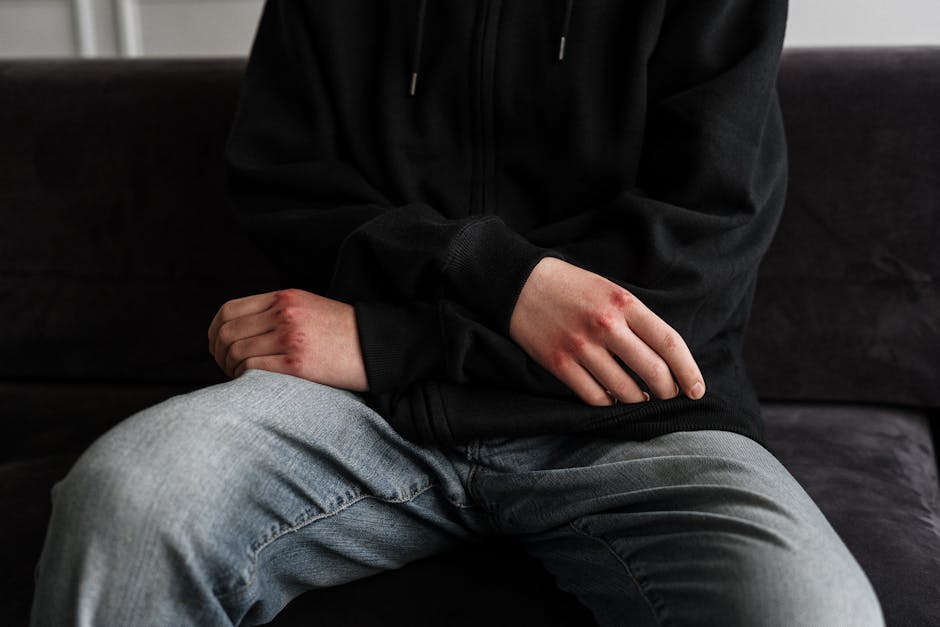
Self-harm is often misunderstood as “attention-seeking” or “dramatic.” In real life, it’s more commonly the opposite: private, carefully hidden, and wrapped in shame. People don’t usually turn to it because they want to die. They turn to it because something inside feels unmanageable, and they’ve run out of other ways to make it stop – if only for a moment.
For many, self-harm functions like an emergency release valve. It can cut through numbness, interrupt racing thoughts, or translate emotional pain into something physical and concrete. It can also become a way to regain a sense of control when life feels chaotic, unsafe, or emotionally crowded. None of that makes it “a good coping strategy,” but it does make it understandable as a response to overwhelm.
It’s also important to hold a gentle, honest distinction: self-harm and suicidal thoughts can be connected, but they aren’t the same thing. Sometimes self-harm is a person’s attempt to survive the moment, not end their life. And sometimes it sits alongside deeper despair. The safest approach is to take it seriously without assuming you already know what it means for that person.
What self-harm can be “doing” emotionally
People self-harm for different reasons, and the reasons can change over time. A few patterns show up again and again:
-
Relief from emotional overload. When anxiety, grief, anger, shame, or panic becomes too intense, self-harm can feel like a fast way to bring the volume down.
-
Breaking through numbness. Some people describe feeling unreal, detached, or empty. Physical pain can feel like proof of being alive, present, or “back in the body.”
-
A way to communicate what can’t be said. Not as performance, but as expression – especially when someone doesn’t have language, trust, or permission to speak about what’s happening.
-
Self-punishment. When someone is carrying harsh self-judgment, self-harm can become tied to guilt, self-hatred, or the belief that they “deserve” pain.
-
Control in a life that feels uncontrollable. When relationships, identity, school, work, or home life feel unstable, self-harm can become a place where the person sets the terms – even if the cost is high.
These patterns don’t point to a single cause. They point to unmet needs: for safety, steadiness, soothing, and someone who can stay present without panicking or punishing.
Why it can become a cycle
Self-harm can create a short-term sense of relief, and the brain remembers that. Relief is powerful reinforcement – especially when someone has few other tools that work quickly. But the relief often fades into shame, secrecy, fear of being found out, or worry about “what’s wrong with me.” That emotional aftermath can raise stress again, which makes the urge return. Over time, the person may need more intensity to get the same relief, or they may find the urges arriving faster.
This isn’t about weakness or “lack of willpower.” It’s what humans do when a coping method is the only one that reliably changes the internal state. The long-term work is rarely about forcing the urge away; it’s about widening the set of options available in the moment, and reducing the pressures that make the urge feel necessary.
If you’re supporting someone who self-harms
What helps most is often simpler than people expect: steadiness, respect, and patience. Many people fear that bringing it up will “put the idea in their head.” Usually, the person has been living with the idea for a long time. A calm, non-accusatory conversation can reduce isolation.
Support tends to land better when it sounds like:
-
Curiosity without interrogation: “When does it get hardest?” “What does it do for you in the moment?”
-
Care without control: “I’m here with you,” rather than “Promise me you’ll never do it again.”
-
Respect for privacy without secrecy: not demanding details, but also not colluding with silence if the person is at risk.
Many people who self-harm already feel like a burden. If your response is panic, anger, or punishment, it can confirm their worst beliefs about themselves and push the behavior further underground. If your response is calm and consistent, you become something rare: a safe nervous system near theirs.
Leadership, teams, and community: the quiet context
Self-harm doesn’t happen in a vacuum. It often grows in environments where people feel they must perform wellness, carry pressure alone, or stay “functional” at any cost. In schools, workplaces, and families, the risk rises when there’s high scrutiny and low emotional safety – when mistakes are punished, vulnerability is mocked, or support is conditional.
Healthy communities don’t demand perfect coping. They make room for messy humanity. They normalize asking for help early, not only when someone is in visible crisis. They train leaders – formal and informal – to respond to distress with steadiness rather than suspicion. Over time, that kind of culture reduces the need for extreme private coping because people have other places to put their pain.
If this feels close to home
If you’re the one self-harming, it often makes sense in the context of what you’ve been carrying. Many people feel conflicted: part of them wants to stop, part of them relies on it to get through the day. That ambivalence is common. Change usually begins not with self-attack, but with noticing patterns – what tends to come before the urge, what the urge is trying to solve, and what kinds of support make the urge slightly less urgent.
If you’re having thoughts about ending your life, or you feel you might not be able to keep yourself safe, it matters to reach out to someone real and immediate – someone you trust, or a local crisis line/emergency service in your country. You don’t have to carry that moment alone.
People often assume the goal is to eliminate pain. More realistically, the goal is to build enough support, meaning, and emotional capacity that pain no longer has to be managed in secret. That shift can be slow, uneven, and still deeply real.