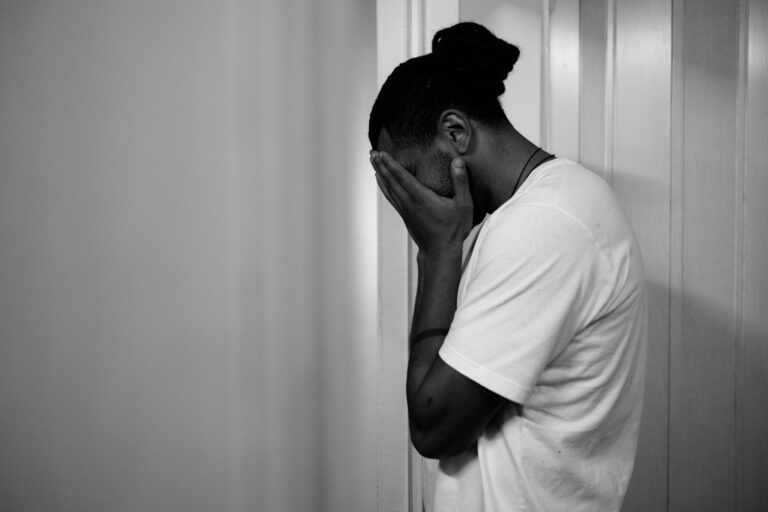


Burnout rarely arrives as a single breaking point. More often it’s a slow narrowing: your world gets smaller, your patience gets thinner, and even simple choices start to feel oddly heavy. People describe it as being “always on,” yet somehow less effective – working harder while feeling less like themselves.
What makes burnout so disorienting is that it can look like a motivation problem from the outside. From the inside, it’s closer to depletion. Not a lack of character, but a nervous system that has been running at a pace it can’t sustainably maintain – especially when the pressure is constant and the sense of control is low.
It also tends to tangle with identity. If you’re the reliable one, the high performer, the caregiver, the leader who absorbs uncertainty for everyone else, burnout can feel like a personal failure rather than a predictable outcome of long-term strain.
How burnout builds: the emotional mechanics
Chronic stress does something subtle to attention and emotion. It trains the mind to scan for what’s urgent, what might go wrong, what needs fixing. Over time, that vigilance becomes a default setting. Rest stops feeling restorative because your brain keeps “working” even when your body is still.
Many people notice a shift in their emotional range. Joy becomes muted. Irritation shows up faster. Empathy feels harder to access – not because you’ve become uncaring, but because your inner resources are already spent on getting through the day. When this goes on long enough, even weekends or time off can feel like recovery “fails,” which adds shame to exhaustion.
Another common pattern is the collapse of meaning. When tasks pile up without a clear purpose, or when effort isn’t matched by recognition, fairness, or progress, the work can start to feel like an endless treadmill. Humans can tolerate a lot when there’s a sense of direction; we struggle when it feels like we’re sacrificing ourselves for something that no longer makes sense.
Signs people often miss (because they look “normal”)
Burnout isn’t always dramatic. It can be quiet and socially rewarded.
-
Functioning on the surface, fraying underneath. You still deliver, but it costs more each week – more time, more effort, more self-criticism.
-
Shortened fuse and emotional flattening. Snapping at small things, or feeling strangely numb about things you used to care about.
-
Withdrawal disguised as “being busy.” You stop replying, stop showing up, stop making plans – not out of disinterest, but because connection feels like another demand.
-
Rest that doesn’t land. You sleep or take time off and still wake up tired, because the stress cycle hasn’t actually slowed.
-
Self-talk that turns harsh. “I should be able to handle this” becomes the background noise that keeps you pushing past your limits.
Why some environments burn people out faster
Burnout isn’t just about workload. It accelerates when there’s a persistent mismatch between what’s asked of you and what you’re given to meet those demands. That mismatch can take many forms: unclear expectations, constant change without support, low autonomy, chronic understaffing, or a culture where saying “no” quietly punishes you.
It also grows in places where emotional labour is invisible. Roles that require absorbing other people’s stress – support staff, managers, carers, educators, health and community workers – often come with an unspoken rule: stay calm, stay kind, keep going. When that becomes your daily performance, you can lose touch with your own signals until they get loud.
Leadership pressure: carrying the weather for everyone else
Leaders and managers often burn out in a particular way: they become the container for uncertainty. They’re expected to be steady, decisive, and reassuring while they themselves may have limited control over resources or outcomes. Many cope by over-functioning – answering faster, staying later, smoothing every conflict, filling every gap.
Over time, this can create a lonely loop: the more capable you appear, the less support you receive. People assume you’re fine. You may even train them to assume it, because admitting strain feels like letting the team down. But teams don’t benefit from a leader who never rests; they benefit from a leader who models sustainable pace, honest limits, and shared responsibility.
Recovery is often less about “fixing yourself” and more about changing the pattern
People sometimes approach burnout like a personal project: optimize sleep, improve productivity, become more disciplined. Those things can help, but burnout often isn’t solved by trying harder at self-care while the underlying pattern stays intact.
Recovery tends to begin when someone stops arguing with the reality of their capacity. Not in a defeated way – more like a clear-eyed acceptance: “This is what my system can do right now, and pushing past it has consequences.” That shift can be the start of better boundaries, more honest conversations, and a different relationship with work and worth.
It also helps to think in terms of rhythms rather than one-off solutions. Burnout is usually the result of repeated overextension without adequate recovery. So recovery often looks like repeated, protected restoration – small enough to be realistic, consistent enough to matter. The goal isn’t a perfect routine; it’s a life that doesn’t require you to abandon yourself to keep up.
The role of community: burnout thrives in isolation
One of the most painful parts of burnout is how it can cut people off from others. When you’re depleted, you often stop reaching out. When you stop reaching out, you lose the very feedback that could normalize your experience and help you recalibrate.
Support doesn’t have to be dramatic to be powerful. Sometimes it’s one person who notices you’re quieter than usual. A colleague who shares the load without making you beg. A friend who doesn’t offer solutions, just steadiness. These moments reduce shame, and shame is a major fuel source for burnout – because it keeps people silent and striving.
If your mind has been moving toward hopelessness, or you’ve had thoughts about not wanting to be here, that’s not something to carry alone. Many people have these thoughts when they’re overwhelmed and worn down. Reaching for support – someone you trust, a mental health professional, or a local crisis line – can be a protective step, not a sign that you’ve failed.
Burnout often ends up teaching an uncomfortable lesson: you can’t build a life on adrenaline and approval forever. But it can also open a door – toward work that’s more humane, relationships that are more honest, and a sense of worth that isn’t measured only by output.